
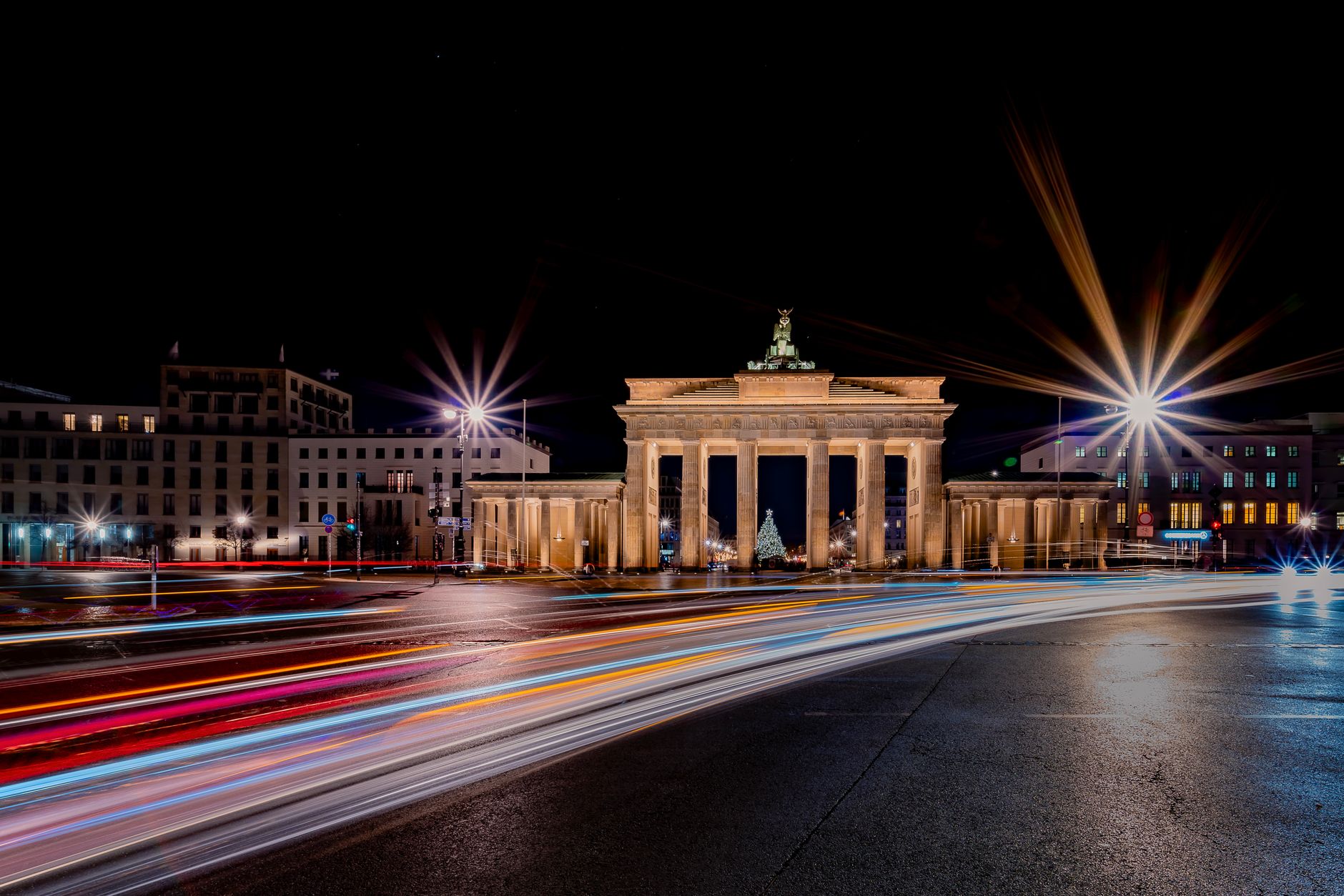
Forty-five years after the Allies split Germany, East joined West at the stroke of midnight on 3 October 1990. Crowds packed the Brandenburg Gate while the flag rose at the Reichstag.
Just before midnight on 2 October 1990, Berliners poured toward the Brandenburg Gate and the Reichstag with black-red-gold flags, champagne, and enough fireworks to light the autumn sky. At the stroke of midnight, East Germany ceased to exist as a separate state and joined the Federal Republic. As HISTORY records, the day closed nearly half a century of postwar division that had turned Germany into one of the Cold War's sharpest symbols. Federal President Richard von Weizsäcker proclaimed unity in front of the Reichstag while the national anthem sounded and the Freedom Bell pealed, and church bells joined the racket across the city. For millions who had grown up staring at barbed wire and concrete, the border was no longer a wall but a memory. Crowds kept cheering well into the morning, waving the tricolor that now stood for one country instead of two. What had seemed impossible only a year earlier was suddenly the law of the land.
From Wall to Unity Day
The road to that midnight had been short and dizzying. Soviet power was fading across Eastern Europe. Tens of thousands of East Germans fled through open gaps in the Iron Curtain, and by 9 November 1989 the Berlin Wall itself began to fall under the pressure of peaceful crowds. The Brandenburg Gate, long sealed in a restricted zone, reopened as a border crossing on 22 December 1989. Talks among East and West German leaders, joined by the United States, Britain, France, and the Soviet Union, turned the hope of reunification into a treaty. On 3 October the German Democratic Republic's territory became five new federal states, and Berlin became one Land again. Two months later, all-German elections made Helmut Kohl the first chancellor of the reunited country.
What people remember most is the sound and the color. Vendors sold sausages and beer on both sides of the old line. Jazz and rock spilled across Alexanderplatz, where protests the year before had helped topple the old regime. Officials closed East German embassies abroad and dissolved the National People's Army that same night. For many observers, German Unity Day marked the practical end of the Cold War even before the Soviet Union itself dissolved. The gate that once stood for division became the postcard of reunion, and every 3 October Germany still marks the date as a national holiday. The party of 1990 was messy, loud, and unfinished in its politics, yet it answered a question that had hung over Europe since 1945.
Where were you, or where would you have wanted to stand, on the night a divided country became one again?

 0.000 SRY