

On Sunday, November 2, 1947, Howard Hughes lifted the biggest flying boat ever built off the water at Long Beach, California. It stayed up for 26 seconds and never flew again.
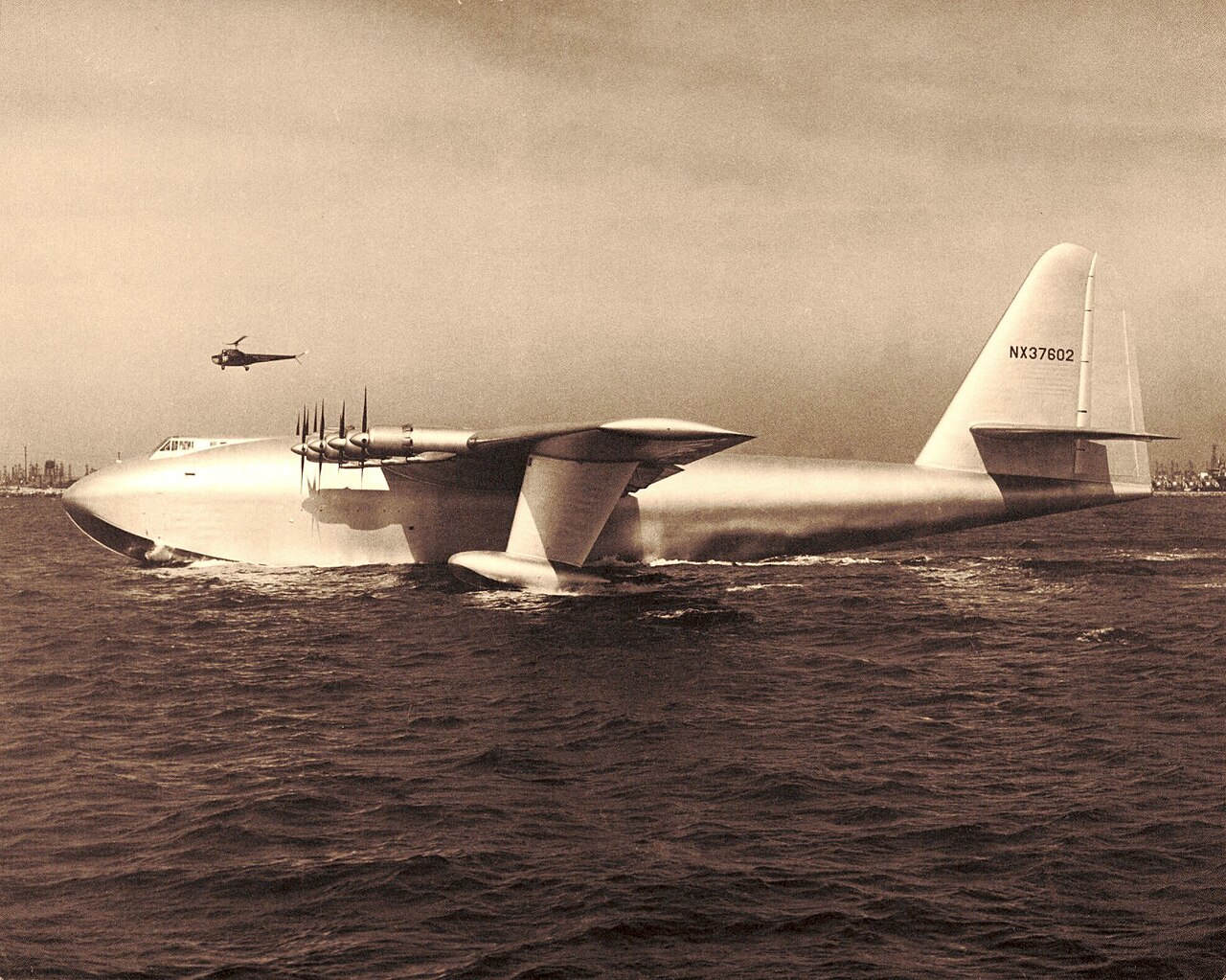
The Hughes H-4 Hercules, the Spruce Goose, on the water around 1947. Photo: SDASM Archives / Wikimedia Commons, public domain
In 1942, German U-boats were sinking Allied ships in the Atlantic at a terrible rate. The shipbuilder Henry J. Kaiser proposed a flying cargo ship that could carry troops and supplies above the submarines. He teamed up with the aircraft designer Howard Hughes, and the government ordered three planes in two years. The design called for 150,000 pounds of cargo, enough for 750 soldiers or two Sherman tanks. Because aluminum was reserved for the war, it had to be built mostly of wood.
Hughes's company used a process called Duramold, bonding thin layers of wood veneer and resin into a strong composite. Critics nicknamed the plane the "Spruce Goose," a name Hughes disliked, though it was almost entirely birch. Work moved slowly, partly because Hughes insisted on perfection. Kaiser left in frustration, and the contract was cut to one plane. The war ended in 1945 with the giant unfinished.
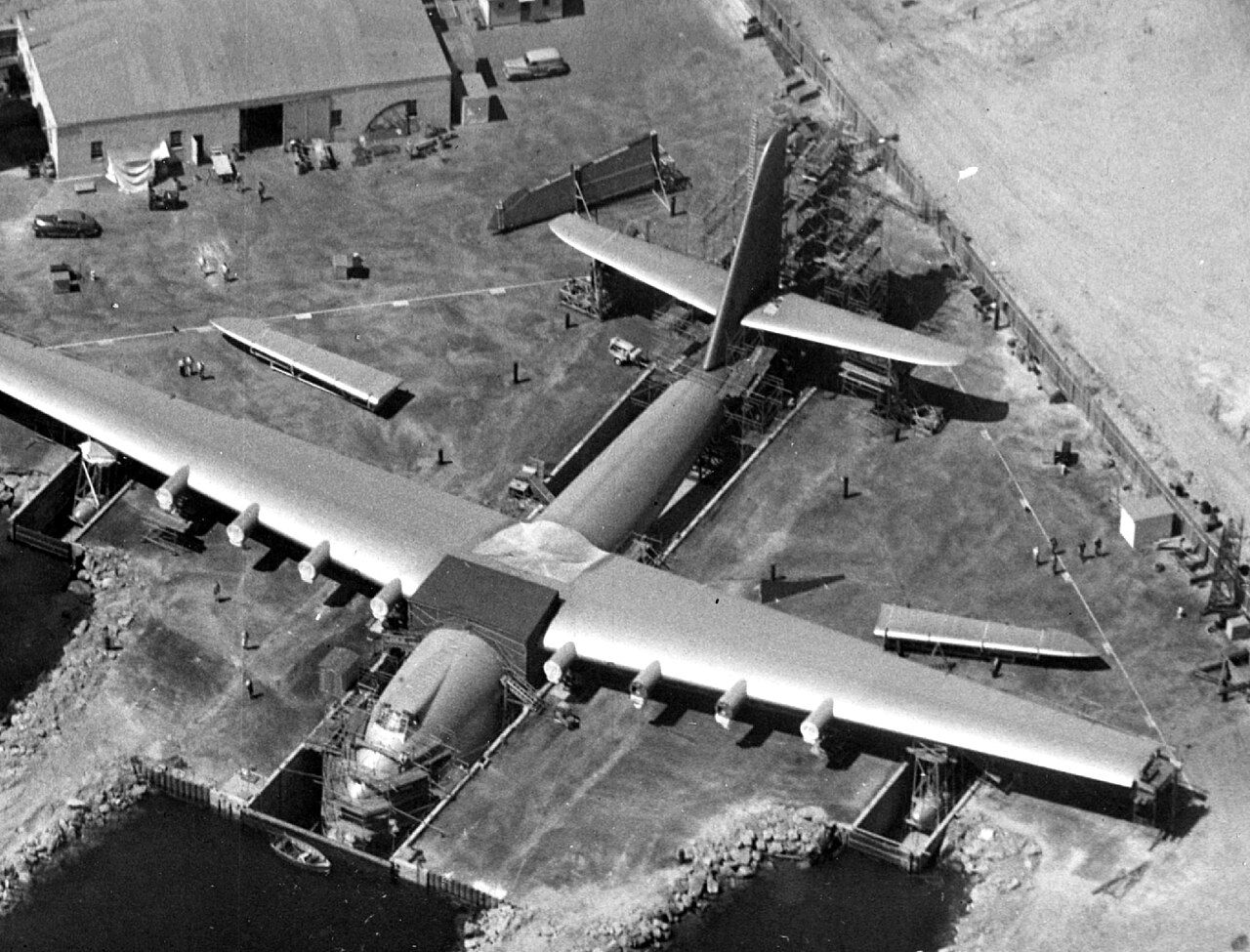
The H-4 Hercules under construction. Image: Wikimedia Commons, public domain
By 1947 the project had cost about $23 million, and the Senate called Hughes to explain the spending. At a hearing on Wednesday, August 6, 1947, he called it "the largest aircraft ever built." He told senators, "I have my reputation all rolled up in it and I have stated several times that if it's a failure, I'll probably leave this country and never come back." During a break in the hearings, he went back to California to test it.
Twenty-Six Seconds Over Long Beach
On November 2, Hughes took the controls for announced taxi tests in Long Beach Harbor. Thirty-six people were on board, including crew, mechanics, reporters and industry guests. Four reporters left after the first two runs to file their stories and missed the main event. On the last run, the plane lifted off and flew about one mile, roughly 70 feet above the water, at 135 miles per hour. It stayed up for 26 seconds.
The flight showed the wooden giant could fly, but so low that it rode on ground effect, the cushion of air between wings and water. Its real lifting power was never tested, because the military no longer needed it. Hughes kept a crew of 300 workers, sworn to secrecy, maintaining it in a climate-controlled hangar. The crew was cut to 50 in 1962 and disbanded after Hughes died in 1976. Today the plane sits in a museum in McMinnville, Oregon.
Was the Spruce Goose a waste of wartime money, or a bold experiment that simply came too late?


A few more pictures from the story:
The Spruce Goose fuselage passing through the Willamette Falls Locks in Oregon on December 16, 1992, on its way to McMinnville. Photo: Portland Corps from Portland, Oregon, U.S, Wikimedia Commons, CC BY 2.0.
The Spruce Goose on display at the museum in McMinnville, Oregon, 2011. Photo: Steven Fine, Wikimedia Commons, CC BY-SA 4.0.
The H-4 Hercules, from the San Diego Air and Space Museum archives. Wikimedia Commons, public domain.